Tenet Square · Robot risk, measured from evidence
Verified risk intelligence for the robot economy.
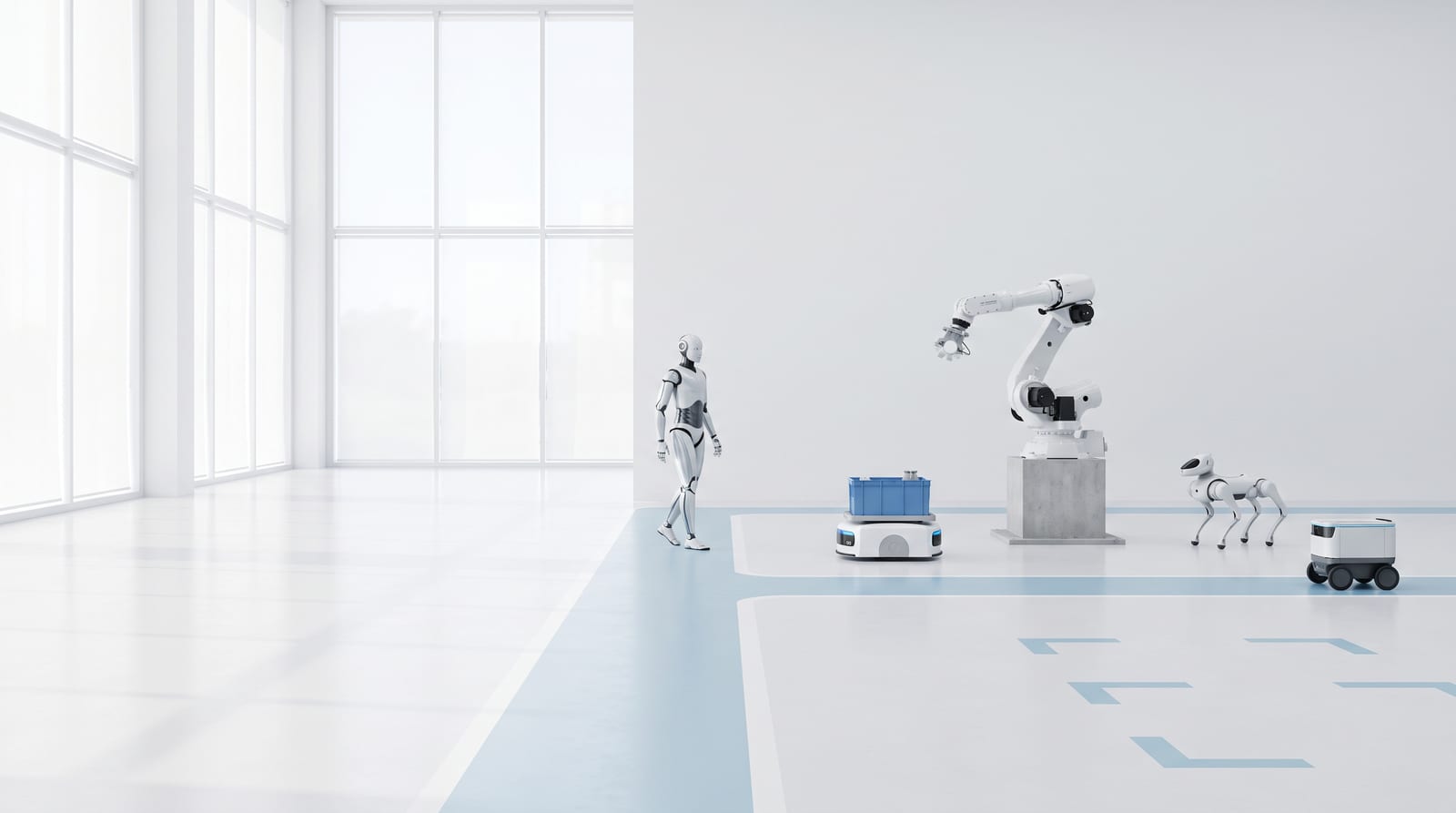
Measuring robot risk in real time, recording and sealing the evidence for maximum trust, so robots can be deployed, insured, and defended with confidence.
- Every robot, no code changes
- Signed on the robot
- Independent append-only log
- Verify in your browser
How it works
Risk intelligence, built on proof.
Scores are only as good as the record underneath them. Tenet Square starts with a record no one can rewrite, then measures and shares what it shows.
-
Record
01Every robot, every important event, sealed as it happens.
A passive tap on each robot’s existing data streams, or on the fleet-management platform that already carries them, records what it sensed, decided and did, signs each record, and anchors it in an append-only log. Nothing sits in the control path. Nothing in the robot’s code changes.
-
Measure
02Behaviour, scored against the envelope it was deployed with.
Envelope breaches, e-stops, near misses, blocked missions and drift after software updates become measurable events, each one tied to a sealed record. A robot that got a new brain is told apart from a robot that got riskier.
-
Price on proof
03A risk signal carriers can verify before they act on it.
Insurers, lenders and operators read the same record. The carrier keeps pricing authority; the evidence is what makes the price fair, per robot and per deployment, and what settles warranty and resale questions on the same facts.
- median capture overhead per record
- 0 µs
- safe at 1 kHz
- to verify a 20,000-record session
- 0 ms
- signatures, chain, roots
- middlewares, zero robot code changes
- 0
- ROS 2 · MQTT · Zenoh · more
- roles on every record
- 0
- sensor · perception · decision · actuator · system
Logs are not evidence
Every dashboard stops at observability. Nobody produces evidence.
When a robot is involved in an incident, the record that gets produced was generated by the operator’s software, kept under the operator’s retention policy, and handed over by the operator’s engineers. Nobody has to allege fabrication. They only have to ask what else was recorded, who had write access, and whether the subset is complete.
A log you fully control is a debugging tool. A log no one, including you, can alter without detection is evidence. The difference is not the data. It is who could have changed it.
- 01
Coordination
Standards and interfaces
Standards, not records.
- 02
Observability
Dashboards, debuggers, robot platforms
Mutable logs. No signing. No proof of completeness.
- 03
Evidence
Tenet Square
Signed on every robot, append-only, gap-audited, independently held.
Watch it work
Sealed as it happens. Checked by the parties that matter.
Records stream in from the robot, get sealed into chunks that each commit to the one before, and every few chunks a root is anchored in an append-only log held outside the maker’s and operator’s reach. A verifier recomputes the whole thing whenever an authorised party asks.
Below, do it for real: your browser re-verifies two sessions recorded by an actual pipeline run.
Live diagram. Every chunk commits to the one before it, and any authorised party holding the keys can re-run this check.
Verify it yourself
Two real sealed sessions. Verify them yourself.
This page does not trust our server. Your browser recomputes the cryptography on sessions recorded by a real pipeline run, then prints the reference verifier’s report.
Your browser fetches the sealed session (about 0.7 MB), re-hashes every chunk, checks every Ed25519 signature and chain link, and rebuilds the Merkle roots. No result is taken from our server, and the same check is available to any insurer, auditor or court.
Pick a session and run the verifier.Independence
Evidence only counts when the record-keeper can’t be the defendant.
Every deployed robot is the shared responsibility of several parties, and each of them has to prove something different about the same incident. All of them need the same facts, from a source none of them controls.
Companies do not audit their own accounts. Aircraft do not carry flight recorders their crews can edit. Tenet Square is paid to keep the record, not to win the argument: no one, including us, can alter it without detection.
- 01
The robot maker
needs to show it was not a defect.
- 02
The operator
needs to show the robot ran within spec.
- 03
The people on the floor
needs to show they were not at fault.
- 04
The insurer
needs to know which of the three to believe.
What you get
The record, and the documents built on it.
-
Incident package
A verified timeline, witness vantages from nearby robots and cameras, a completeness audit, an access-audit trail, and a verdict. A document an adjuster, a warranty desk or counsel can use without us in the room.
-
Risk view, robot by robot
Envelope breaches, stops, near misses and update-driven drift for every robot, rolled up when you want the whole picture, each count traceable to the sealed records behind it.
-
Reader access
Scoped, revocable access for an insurer, a lender or an auditor. Everyone reads the same record and can verify it independently.
-
Activation baseline
A signed record at go-live: robot identity, site, declared operating envelope, software and model versions. Warranty, renewal and resale questions are judged against it.
Incident package
INC · robot_stopped · atlas-dock-01 · 7c1e4b02
Timeline · every row cites a sealed record
- +0.0 s
Robot stopped
robot attribute · error
- +6.0 s
Mission aborted · Dock bay 3 restock
mission log · error
- +11.0 s
Safety field triggered near dock bay 3
platform audit log · warning
3
witness vantages
4,731
records · 0 dropped
2
reads logged
Values mirror the demo incident in the console: a robot stopped near a dock bay, the mission aborted, a safety field warning, three witness vantages.
Why now
The clocks are already running.
Robots are leaving cages for warehouses, hospitals, stores and homes. Carriers have begun excluding autonomous-system risk rather than pricing it, because where underwriters cannot measure, they cannot price. And regulation now has dates.
Each instrument was drafted separately. All of them assume the machine’s history can be produced, intact and interpretable, years after the fact.
-
Feb 2025
ISO 10218-1 and -2:2025 published
First major revision of the industrial robot safety standards since 2011. Cybersecurity enters the safety case.
-
H1 2026
Humanoid shipments up nearly 300% year on year
Counterpoint Research. Most units are in pilots today, around people, in shared spaces.
-
9 Dec 2026
Revised EU Product Liability Directive
Software is a product. Courts can order disclosure of evidence; failure to disclose can raise a presumption of defect.
-
20 Jan 2027
EU Machinery Regulation 2023/1230 applies in full
Safety review of self-evolving behaviour, digital documentation, ten-year retention. No transition period.
Who it’s for
Four readers. One record they can all check.
Nobody has to trust anybody else’s copy. Pick a reader to see which parts of the same sealed record they rely on.
Sealed record
atlas-dock-01 · mission-034 · robot_stopped · 7c1e4b02
- Activation baseline site B3 · envelope v4 · nav 2.3.1 · model 7f1a
- Verified timeline 3 signals over 11.0 s · ordered · signed on the robot
- Witness vantages 2 cameras · 1 robot · frames held −30 s / +90 s
- Versions at the time software 2.3.1 · model 7f1a · unchanged for 41 days
- Completeness 4,731 records · 0 dropped · 0 gaps
- Access log operator · insurer (read) · 2 reads, both logged
- Verdict 12/12 signatures · chain intact · roots anchored
Operator: The robot stopped at the safety field, inside its envelope. The dispute ends on the record, not in a meeting.
Robot maker: Commands, versions and conditions at the moment of the stop. Warranty is decided on evidence both sides can read.
Insurer or lender: A record checked without trusting the operator, the maker or us. The carrier prices; the lender sees how the asset was used.
Fleet platform: The package posts back into your incident view. Every robot on your platform carries its own record, read-only on your side.
Through the robot’s life
The record travels with the robot.
Warranty, claims and residual value are one question asked by different people: what did this machine do, and can you prove it? The record starts at activation and never stops.
-
01 · Activation
What was deployed, and within what envelope?
A signed baseline: identity, site, declared envelope, software and model versions.
baseline sealed -
02 · Daily operation
Is it behaving the way it was underwritten?
Events measured against the baseline, each tied to a sealed record. Version changes are visible the day they ship.
events measured -
03 · Incident
What happened, in what order, and who saw it?
An incident package: verified timeline, witness vantages, completeness audit and a verdict.
package issued -
04 · Warranty claim
Defect or misuse? Whose responsibility?
Maker and operator read the same record of commands, versions and operating conditions.
settled on record -
05 · Lease return or resale
How was this robot actually used?
A signed history that transfers with the robot and supports its residual value.
history transfers
Works with your stack
Every robot, directly. Your fleet platform, too.
If a robot has a message bus, run our agent; if it doesn’t, add one call. And if a fleet-management platform already carries the telemetry, we connect to it read-only. Either way the record is kept per robot, and recorded files can be sealed after the fact.
- ROS 2
- Foxglove WebSocket
- MQTT
- Zenoh
- SDK · Python / C
- MCAP · rosbag replay
- Fleet platform API · read-only
Where robots work
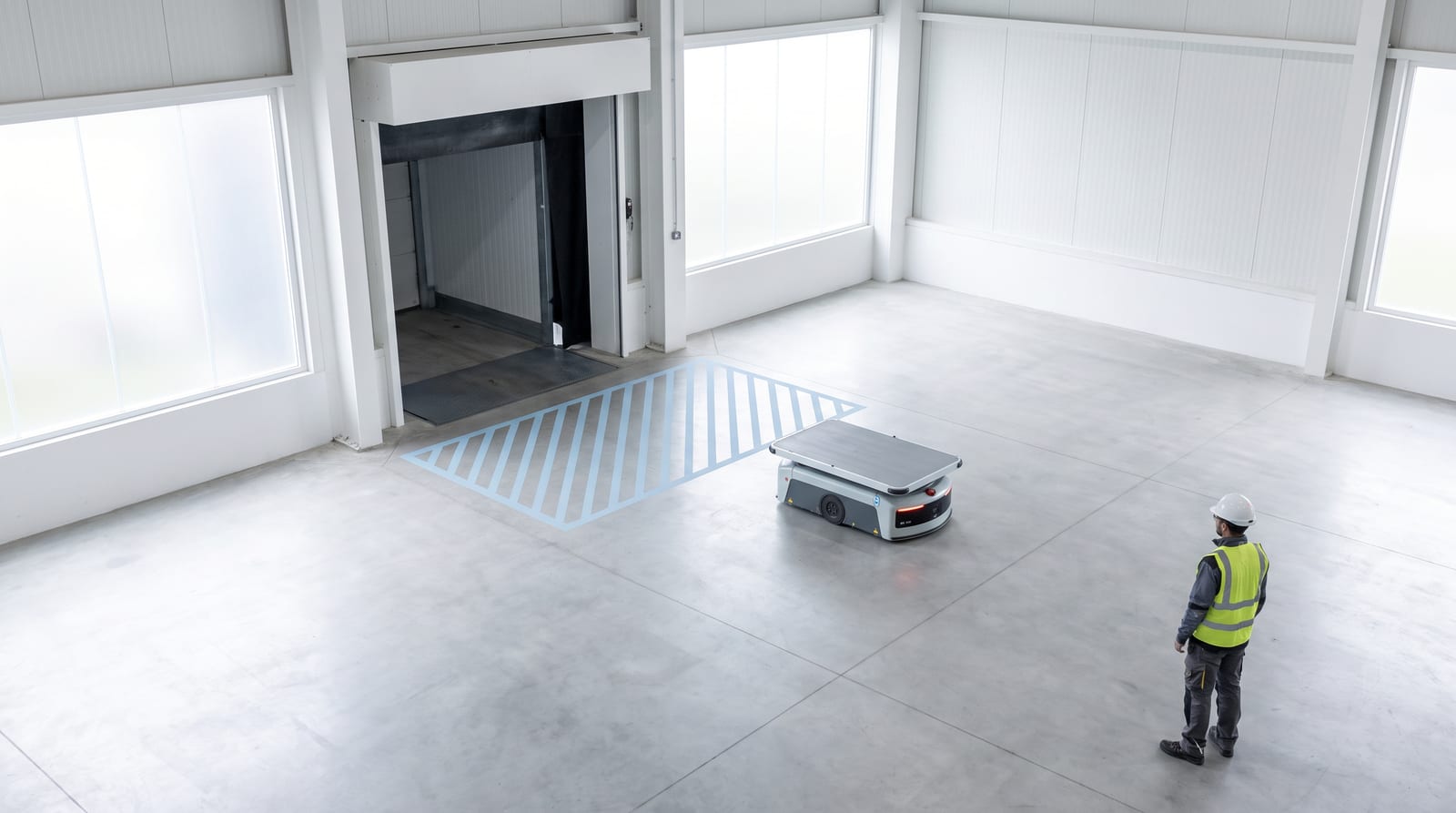
Humanoid or wheeled, arm or cart: the record is the same.
The capture adapter is the only part that knows which robot it is talking to. Everything after it treats the evidence identically.
-
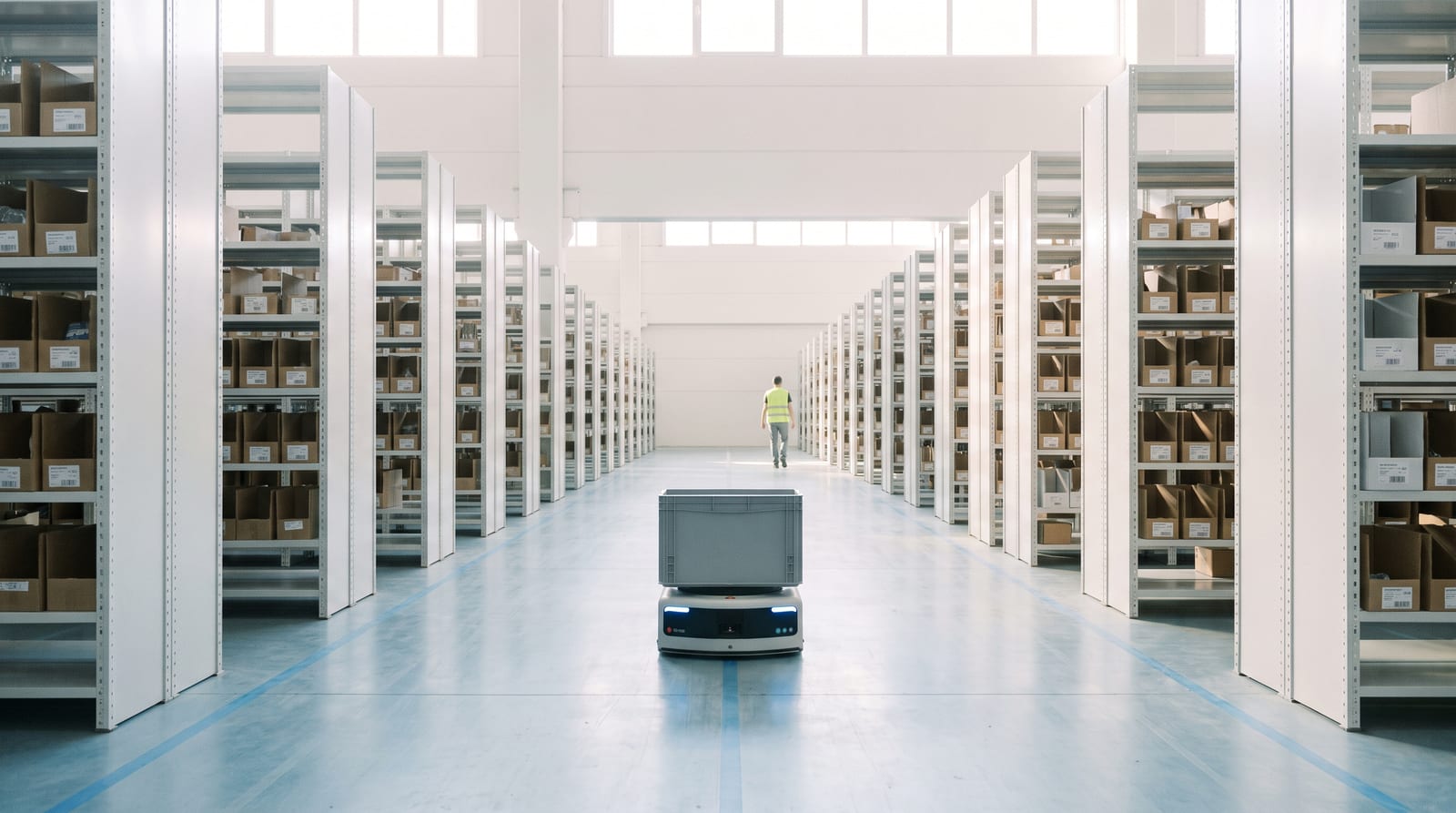
Warehouses
AMRs and pickers beside people, on floors their owners do not control.
-
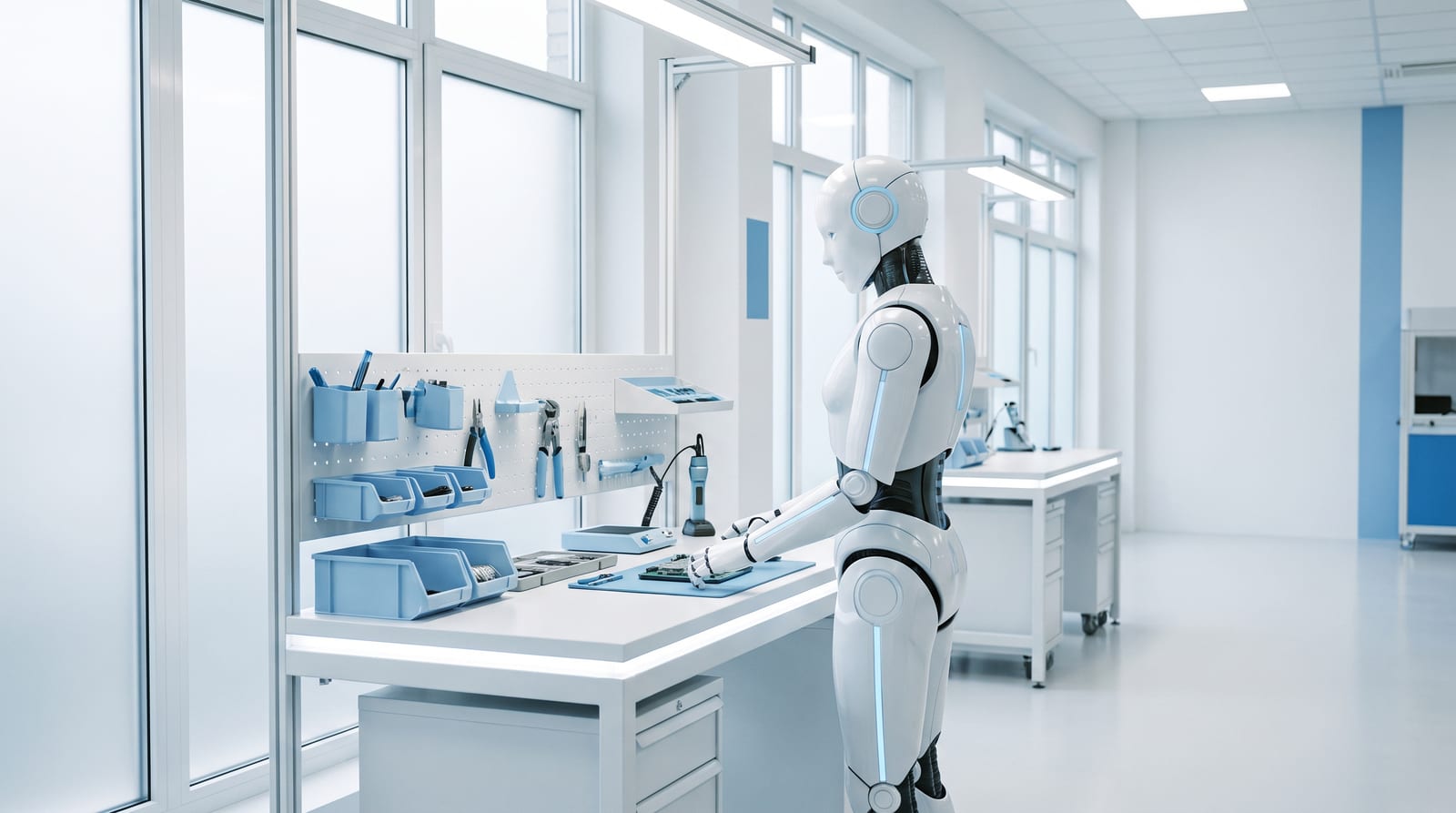
Assembly lines
Humanoids and arms whose behaviour changes with every software update.
-
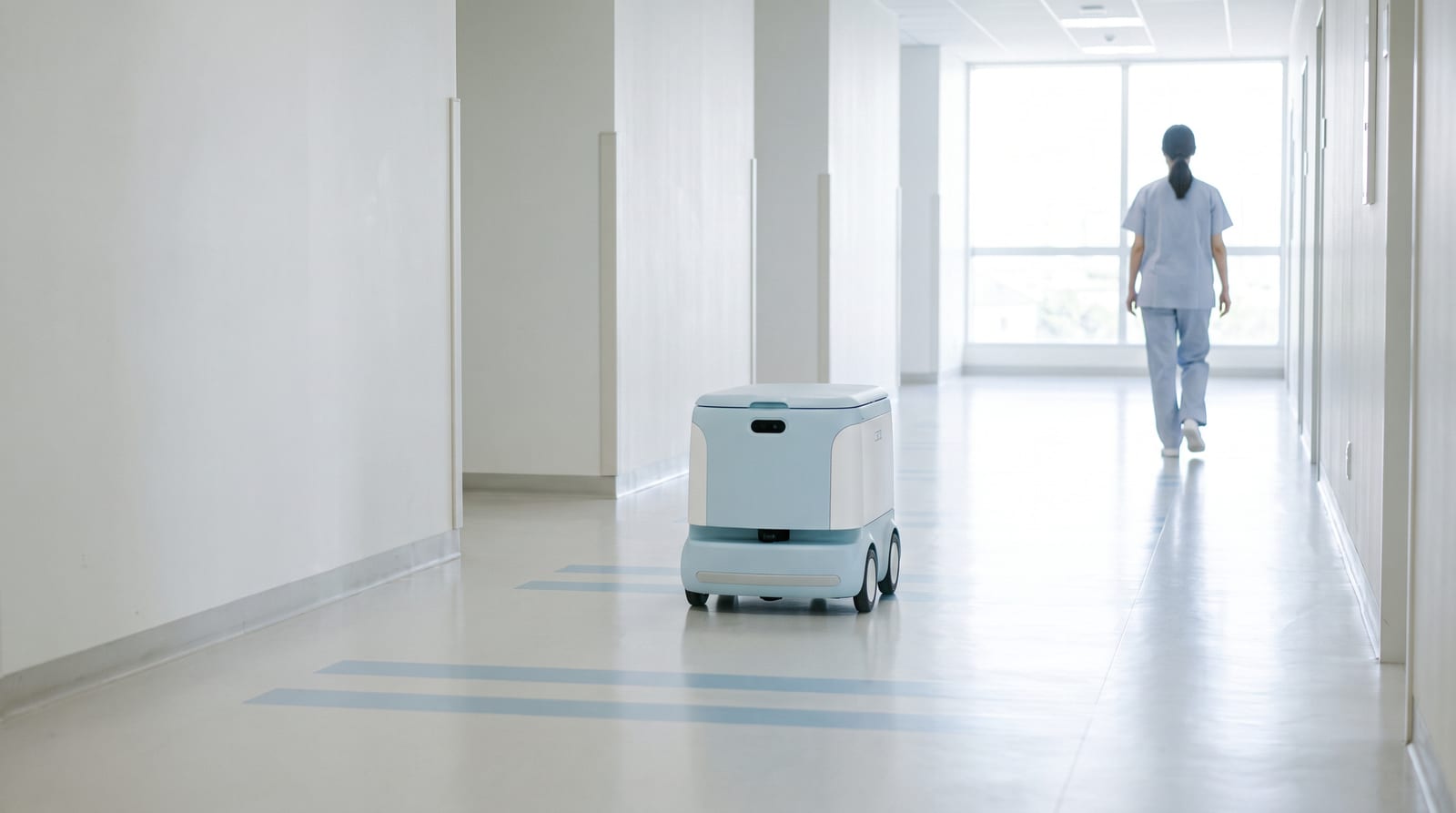
Hospitals
Delivery robots sharing corridors with patients and staff.
-
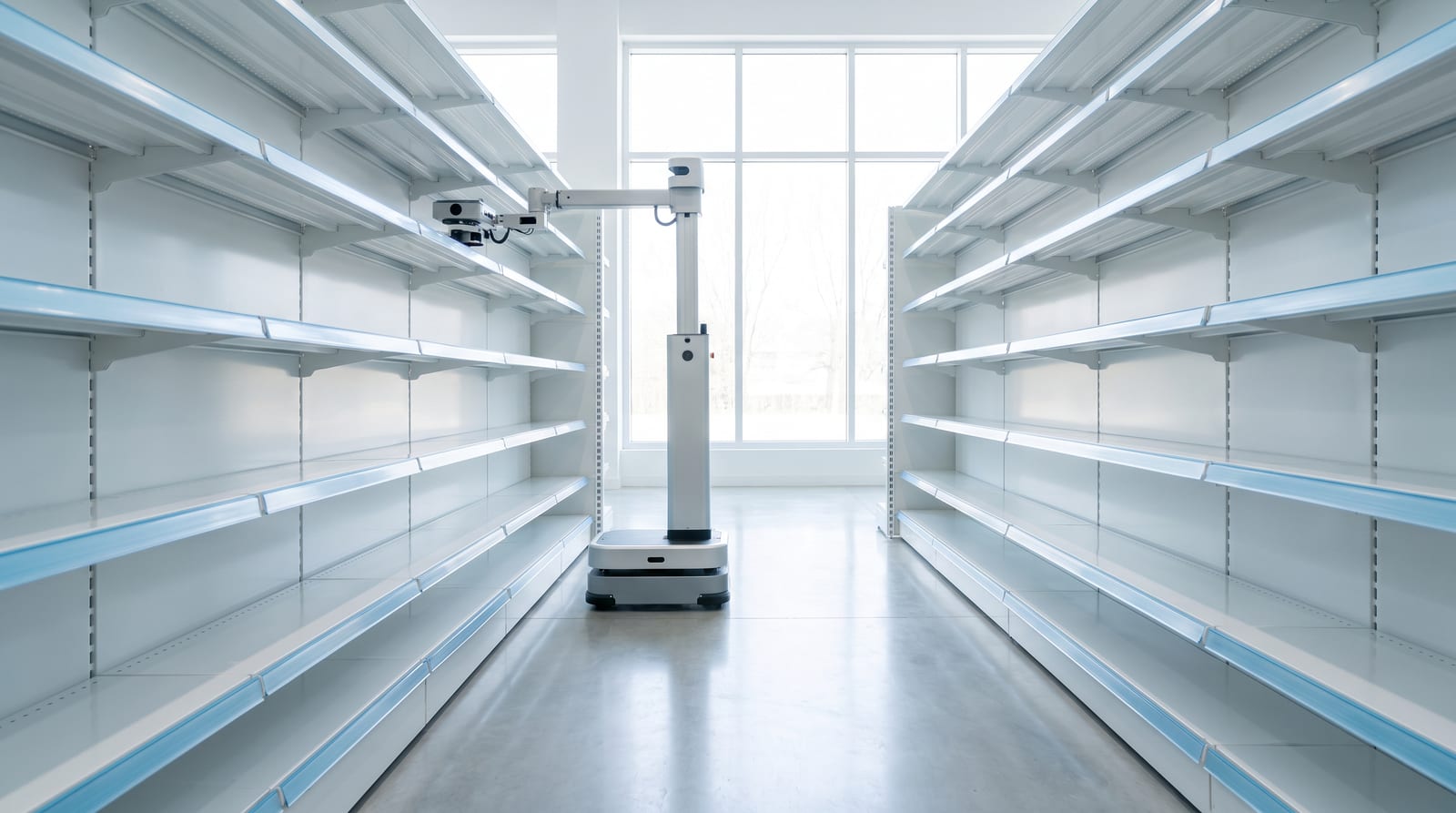
Stores
Restocking and cleaning robots in public space.
A pilot in three moves
Start with the robots you already run.
One robot or ten thousand, the path is the same: ninety days, success criteria agreed in writing, a fixed decision date, and a written closure record either way.
- 01
Connect
One configuration file on each robot’s message bus, one SDK call where there is no bus, a read-only connection to the fleet platform you already run, or recorded files sealed after the fact.
- 02
Record
Every robot records daily. Events are measured against its activation baseline; incident packages are produced as things happen.
- 03
Read
Grant an insurer, lender or auditor scoped access. They verify the record without trusting you or us.
Robot Risk Index
You can’t insure, regulate, or fix a risk you can’t measure.
Our running record of robot incidents, failures, and near misses, collected in one place so robot risk can be understood, compared, and quantified.
Make every robot measurable, scoreable, insurable.
A structured 90-day pilot: success criteria agreed in writing, a fixed decision date, and a written closure record either way.